Where does a mine need water?
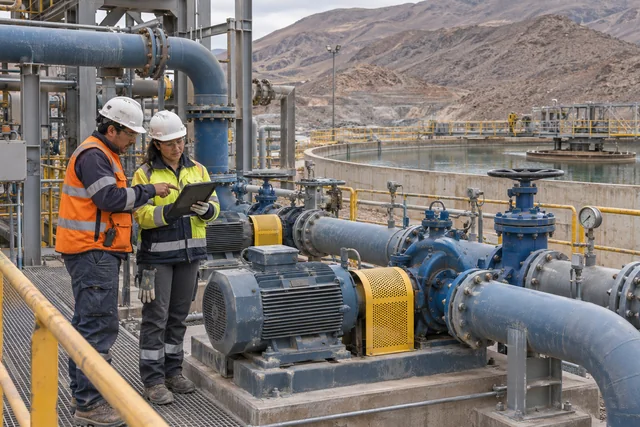
Copper ore is crushed and mixed with water so it can be moved and processed. After the copper-bearing material has been separated, fine solids and water are left behind. Some of that water can go back into the plant. Water that is consumed or lost elsewhere must be replaced. A supplier offering water treatment for mining in Chile needs to know whether its equipment belongs on the incoming supply, inside the plant or on the return stream.
Large copper operations in northern Chile sit in the dry Atacama. Some use seawater for part of their supply. That creates work on the coast and along the route to the mine. Operators also seek to keep water circulating inside their plants. That creates different work in the concentrator or at the tailings facility, where the material left over after processing is stored. Pumps, pipes and instruments can be needed in both places. The application determines what the equipment must do and which team considers it.
Escondida and Centinela illustrate different jobs
Escondida is a major copper operation in northern Chile run by BHP. BHP describes how the mine uses desalinated seawater. Desalination removes dissolved salts before the water is used. A supplier of pretreatment equipment may need to look at the coastal plant. A business offering pumps for long distances needs to know how the water gets from the coast to the mine. An instrumentation company may find that its application belongs at the very end of that journey, inside the plant.
Centinela is a copper operation of Antofagasta Minerals. Chile's mining council documents a facility there for thickened tailings, the solids left over after ore processing. A thickener lets solids settle so that water can be drawn off. If the recovered water meets the needs of the process, it can be used again. This is an example of water recovery in copper mining. A pump or filter supplier should start with different questions from those it would ask about desalination: what remains in the water and how do those conditions change while the plant is running?
What process water buyers can evaluate
A proposal for a pump can start with the flow, distance and elevation change. Depending on the plant, water quality, fine solids and the space available for maintenance may matter just as much. A claim about lower energy use is assessable when the site can see the flow rate and pumping head at which it was measured. For a filtration system, explain what enters, what the treated water needs to meet and what the buyer would need to measure in its own plant.
A simple water balance can be helpful. It shows what enters, where water is used and what returns or is lost. Sales staff rarely need the whole balance to start a conversation. A small portion may show whether the equipment belongs on the same part of the plant as a previous installation. The buyer can then see where the supplier's evidence is relevant and which data are still needed. This gives the team a question to ask before it commits to a performance figure.
When a trial can tell the plant more than a brochure
A customer may tell you that water quality in the return stream changes during the day. A reading taken during stable operation will answer only part of the question. A trial agreed with the plant could show how a filter handles changing solids loads. Set out where the measurements will be taken, which conditions need to be represented and how the plant will judge the result. VolzMarketing can help prepare those questions and describe the approved results for the sales team. Engineering and the customer remain responsible for the trial and technical conclusions.
What VolzMarketing can prepare
We can select one application with your technical team and investigate which Chilean copper operations or design firms deal with it. We record what the operator has published, where the equipment might fit and what still needs to be confirmed. The result could be a list of responsible teams or one well-prepared enquiry to an operator you already know. If the evidence suggests that the installation you were considering is in the wrong part of the plant, that is useful to know before anyone spends time on a quotation.
We can also prepare a Spanish-language sheet for the first technical call. It can show the proposed location, the results your company can document and the inputs still needed from the customer. This gives the sales team something specific to send in place of a catalogue. If you have a product sheet or a reference from water supply, pumping or recovery, send it to us. We can discuss which application in Chile is worth investigating and whether it would help to prepare an introduction for the first conversation.